In short
A Spitzer silo trailer’s performance depends not only on service but also on how it was loaded. PE/PP granulate enters the tank from big-bags, octabins or containers — usually by gravity, without pneumatics, which protects the plastic structure. Clean, dry loading means fewer problems during the later pneumatic discharge.
Where the cargo in a silo trailer comes from
Granulate (PE, PP) rarely travels straight from the reactor to the plant. It usually arrives in big-bags, octabins or sea containers and is only then transferred into the silo trailer. This step — loading — is often overlooked in service talk, yet it really affects the tank and the frequency of service visits.
Polymer producers typically package granulate in big-bags of 1,000–1,250 kg or in octabins of 500–800 kg. Sea container imports add another step: the container is tipped or unloaded bag by bag at the transloading terminal. The key question at each step is: is the loading done correctly?
Gravity loading without pneumatics
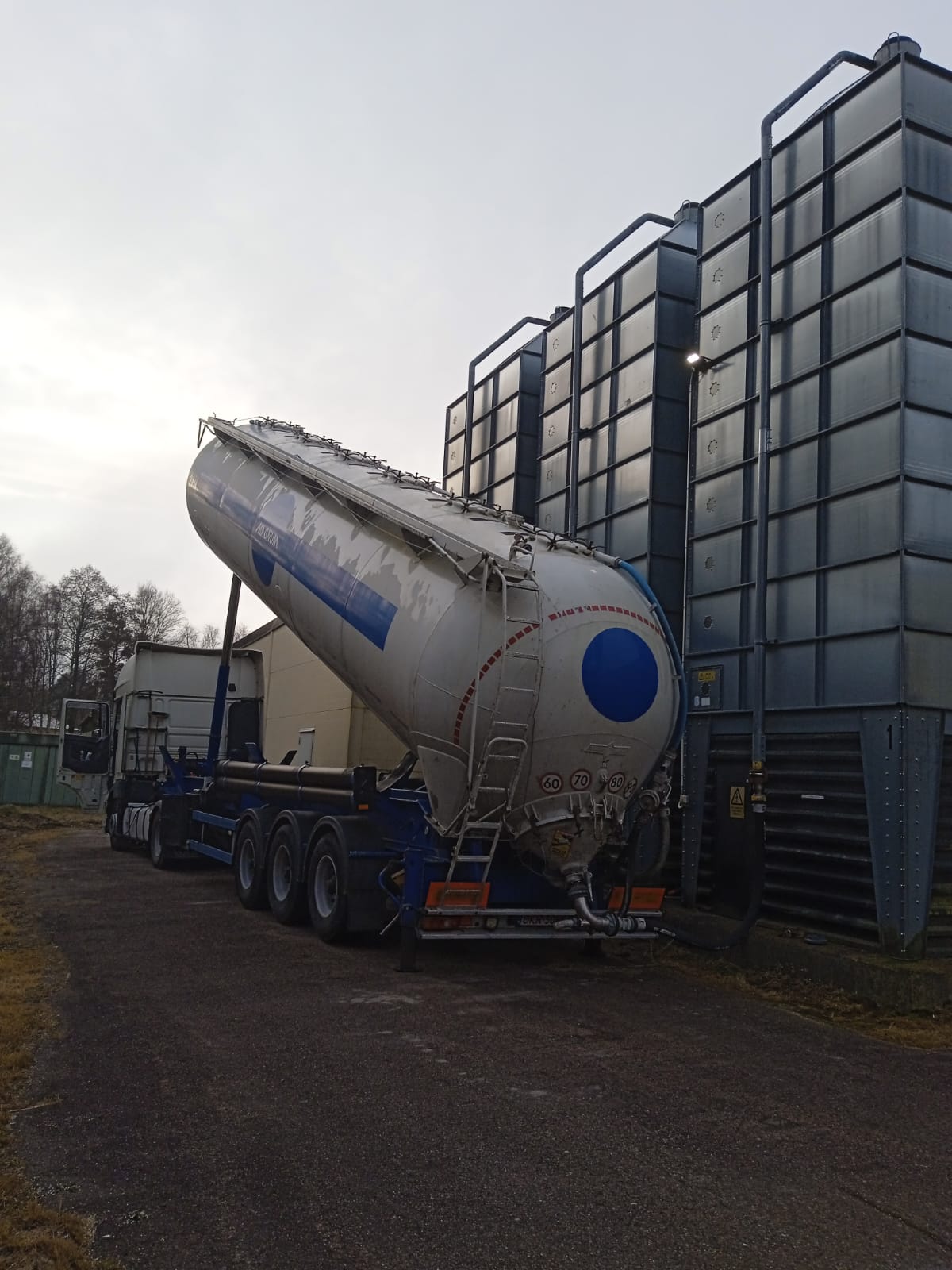
The big-bag → silo trailer transfer is done by gravity through the top dome. The material flows by its own weight — with no pressure system, the granulate structure stays intact: no dust generation, no grain abrasion, no fines that would accelerate valve wear during later discharge. This is the correct method for PE/PP granulate.
The SMIALA transloading terminal handles this transfer at up to 200 tonnes per day — from big-bag, octabin and sea container — with a 2,000 big-bag covered warehouse on site. The terminal is 4 km from A4 motorway junction Gogolin (Opole region), positioned on the main route between Germany and the Polish interior.
Why loading conditions affect service frequency
Moisture
PE/PP granulate absorbs very little moisture, but the big-bag itself can trap humidity. Loading wet material — even slightly damp — leads to clumping inside the tank. Clumped granulate does not fluidise correctly through the aeration pads and can block the butterfly valve or the S-pipe fitting. Result: a discharge fault that looks like a valve problem but is actually a loading problem.
Prevention: material should be loaded from dry, covered storage. The SMIALA terminal stores big-bags in a closed 3,000 m² hall, no UV, temperature-controlled.
Contamination
Mixed loads — even trace amounts of a different granulate grade or foreign material in a reused big-bag — cause faster wear on the S-valve seat and aeration membranes. Over time this translates to more frequent service visits.
Prevention: dedicated zones per customer at the transloading terminal, full material traceability from bag label to loading record.
Overfilling
Spitzer silo trailer tanks are designed for a specific fill level — typically 95% of tank volume. Overfilling stresses the top dome seals and aeration system. Experienced terminal operators load to the correct weight, not simply until the dome cannot be closed.
What good loading means for service intervals
A Spitzer silo trailer loaded correctly — dry material, correct fill level, no contamination — will typically show:
- Aeration pads lasting 3–5 years before replacement
- Butterfly valves and S-pipe fittings lasting 4–7 years
- No discharge-related emergency callouts between scheduled services
A trailer loaded carelessly may need valve replacement annually and aeration pad replacement every 18 months. Over a 10-year vehicle life, the difference in service costs is significant.
When a discharge fault does occur
If a loading-related discharge fault occurs on the road, Spitzer service at PHS Magnum covers:
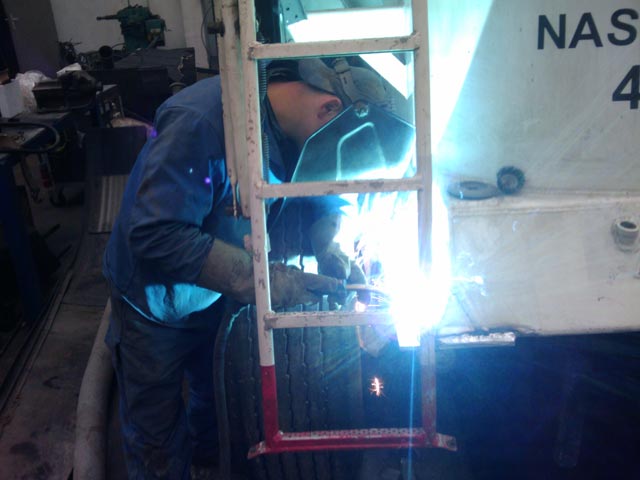
- On-site diagnosis at the workshop in Chorula (4 km from A4 Gogolin junction)
- Mobile emergency service in the Opole region and nearby A4 stretch (Gliwice, Rybnik; Wrocław occasionally), 1–3 hour response
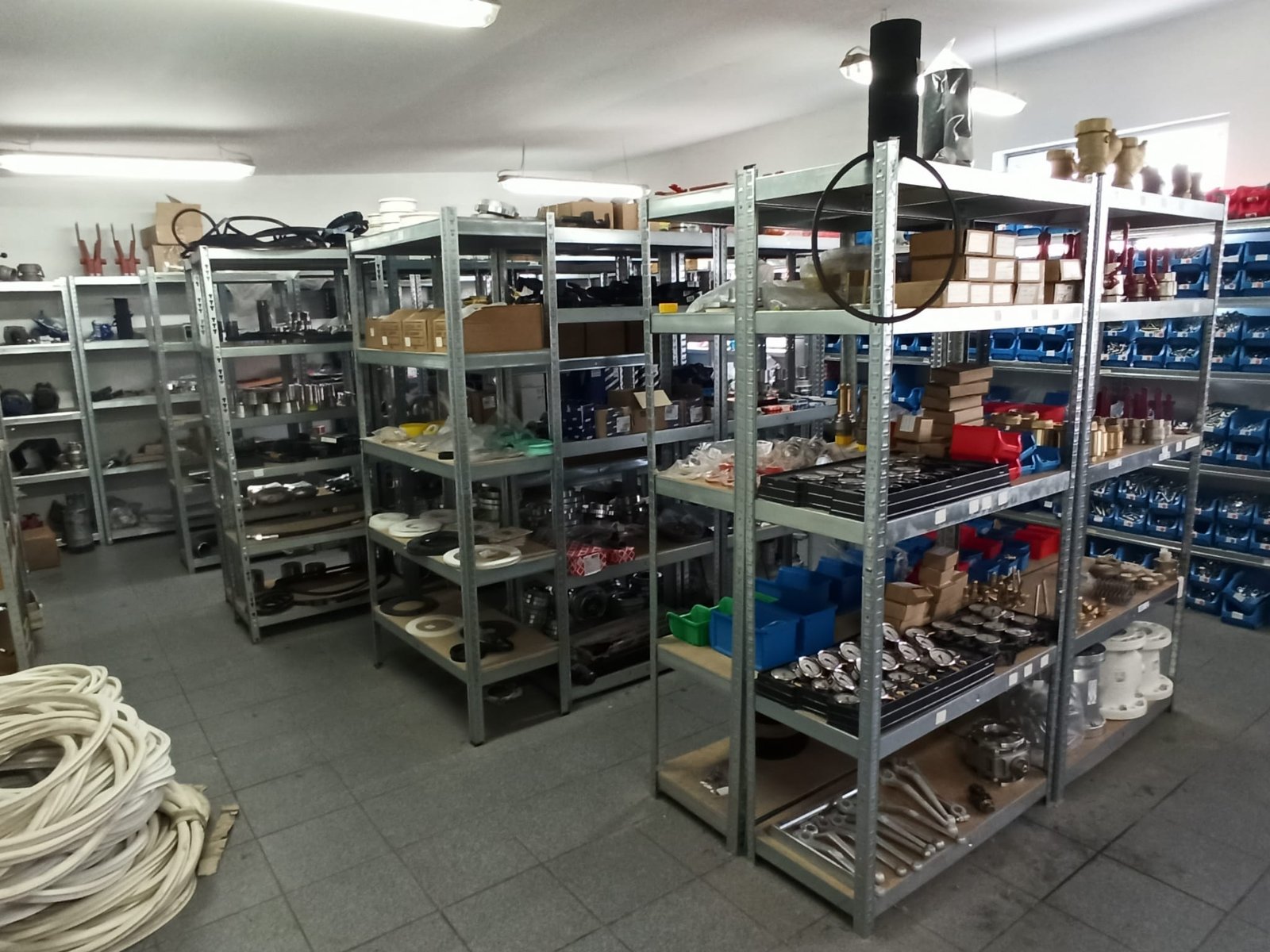
- Valve replacement, aeration pad replacement, full pneumatic system service
- TDT pressure vessel inspection combined in the same visit
One base handles both the loading side (via SMIALA.com) and the service side (via Spitzer service) — coordinating both means fewer total vehicle stops per year.
More on servicing mixed fleets (silo trailers + concrete pumps) at the same base: one service for the whole fleet .
Planning loading and service for a Spitzer silo trailer? Call: +48 602 716 551.