Summary
Selecting the right parts for a silo trailer comes down to three steps: identify the trailer (series, model, VIN from the data plate), identify the part (dimensions, port type, photo), and decide between OEM and aftermarket. Standardised components — Storz couplings, DN valves, hoses — are interchangeable between Spitzer and Feldbinder; aeration pads and hatch seals are not. Full range: spare parts catalogue .
Why Selecting Silo Trailer Parts Can Catch You Out
A silo trailer is a pressurised vessel on wheels — and its parts span both the automotive world (axles, brakes, suspension) and the industrial valve-and-fitting world (valves, seals, ports). The latter follows DN norms and port types where mistakes are easy to make: a valve that “looks the same” may have a different flange bolt pattern, and a hatch seal can differ by a centimetre in diameter between production years of the same series.
The cost of ordering the wrong part is not just a return shipment. It is a trailer sitting idle for another week while the correct component travels from Germany. Ordering methodically is the only sensible approach — the proven procedure is set out below.
Main Part Categories — What Wears and How to Spot It
Aeration Pads
Microporous fabrics (polyester, polyamide, or food-grade versions) fitted to the floor of the discharge chambers, through which compressed air is blown to fluidise the bulk material. This is the most frequently replaced wear item on a silo trailer. Signs of wear: material remaining in the chamber after discharge, increasing unloading times, and bulk powder or granules appearing in the air lines.
Service life depends on the cargo — PE/PP granulate is relatively gentle, while abrasive and alkaline materials can shorten pad life several times over. Aeration pads are make- and series-specific: the profile, mounting groove, and clamping strips on a Spitzer differ from those on a Feldbinder, so there is no such thing as a genuine “universal” replacement.
Seals
The second most frequently replaced group: top-hatch (filling manhole) seals, rear hatch seals, inter-flange gaskets, and valve-ball seals. Materials: EPDM (standard), food-grade silicone, or PTFE (chemicals, high temperatures). The failure symptom is unambiguous — the trailer will not hold its test pressure, you can hear hissing at the hatches, or discharge time increases.
When ordering a hatch seal, the critical parameters are the diameter and cross-sectional profile — these can vary between production years of the same series. The safest approach: photograph the data plate and photograph the old seal with a ruler alongside it.
Valves
Several families of valves are fitted to a silo trailer, each with its own selection logic:
- Product ball valves (segmented, PTFE-lined) — at the collector outlet; selected by DN diameter (typically DN80–DN125) and port type
- Membrane and butterfly valves (e.g. AKO, EBRO) — air and product flow control; selected by DN and actuator type
- Safety valves — protect the tank from overpressure; a critical component subject to verification at TDT inspection, selected by opening pressure and port size
- Non-return valves (e.g. Gestra RV) — in the air circuit; prevent bulk material from being forced back into the system
Hoses and Storz Couplings
Pneumatic discharge hoses and the Storz coupling system (couplings, reducer clamps, safety clamps, washers, and spanners) are fully standardised components — they are interchangeable between makes. Here, you only need the coupling size and hose length. It is worth remembering safety clamps: their absence is one of the most common findings at roadside checks.
Slide Gates and Sundries
Shut-off slide gates, sight glasses (for monitoring material flow), glycerine pressure gauges, thermometers, hatch bolts, and even locker keys and locks — small items that can prevent a discharge just as effectively as a major breakdown. A full list of categories with descriptions is available in the spare parts catalogue .
How to Identify Your Trailer: Data Plate and Series Codes
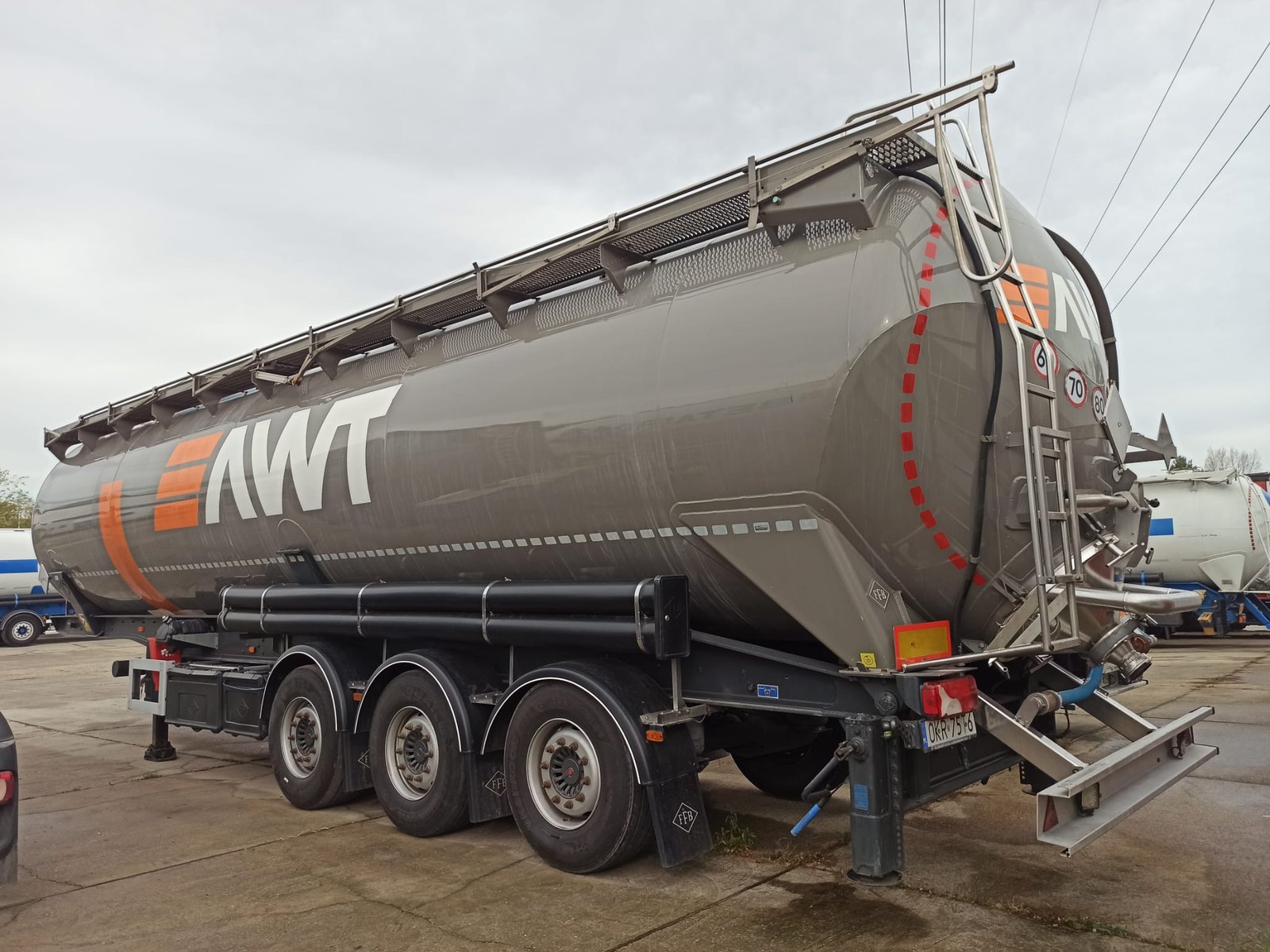
The starting point for any parts query is the tank data plate — it contains the manufacturer, type, serial number, year of manufacture, working pressure, and capacity. For Spitzer trailers, the series code tells you a great deal on its own: SF denotes a non-tipping version, SK a tipping version, and the last two digits of the model number give an approximate capacity in m³ (e.g. SF 2745 ≈ 45 m³). The suffixes P and Z distinguish the standard variant from the steering-axle variant.
When making a parts enquiry, you therefore need just three things: a photo of the data plate, the VIN, and a photo of the part with dimensions. With that package, a supplier can match the correct component without inspecting the trailer — and without the risk of a wrong-flanged valve arriving after a week’s wait.
OEM or Aftermarket — How to Decide Rationally
A sensible rule divides parts into two categories:
- Safety and pressure-bearing components — safety valves, hatches, tank elements subject to TDT inspection. Here, choose OEM or certified aftermarket parts with documentation — traceability of the component matters at TDT revision.
- Wear items — seals, hoses, aeration pads, minor fittings. A quality European aftermarket part (EPDM, food-grade silicone) matches OEM service life and is usually available faster.
The dividing line runs through supplier quality, not through the word “aftermarket” itself. Cheap counterfeit seals can harden after a single season — the saving vanishes at the first leak on a discharge.
Spitzer ↔ Feldbinder Compatibility: What Fits, What Does Not
Mixed fleets (Spitzer and Feldbinder sharing the same yard) benefit from the fact that a substantial proportion of components are common to both makes:
| Part Group | Compatibility |
|---|---|
| Storz couplings, clamps, hoses | ✅ Standardised — interchangeable between makes |
| Ball/butterfly valves by DN | ✅ Where diameter and port type match |
| Pressure gauges, thermometers, non-return valves | ✅ Standard fittings |
| Aeration pads | ❌ Different profile and mounting — make- and series-specific |
| Hatch seals | ❌ Varying diameters and profiles — model-specific |
| Locker covers, locks, bodywork items | ❌ Manufacturer-specific |
The practical conclusion: standardised fittings can be held in a single shared stock for the whole fleet, while aeration pads and seals must be stocked separately per make and series. Parts specific to Feldbinder trailers (EUT, KIP) are listed in the Feldbinder spare parts catalogue .
Parts ex-Stock in Chorula — How to Order
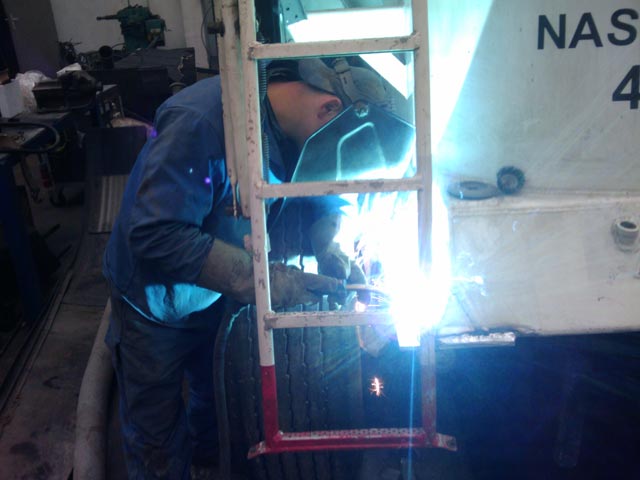
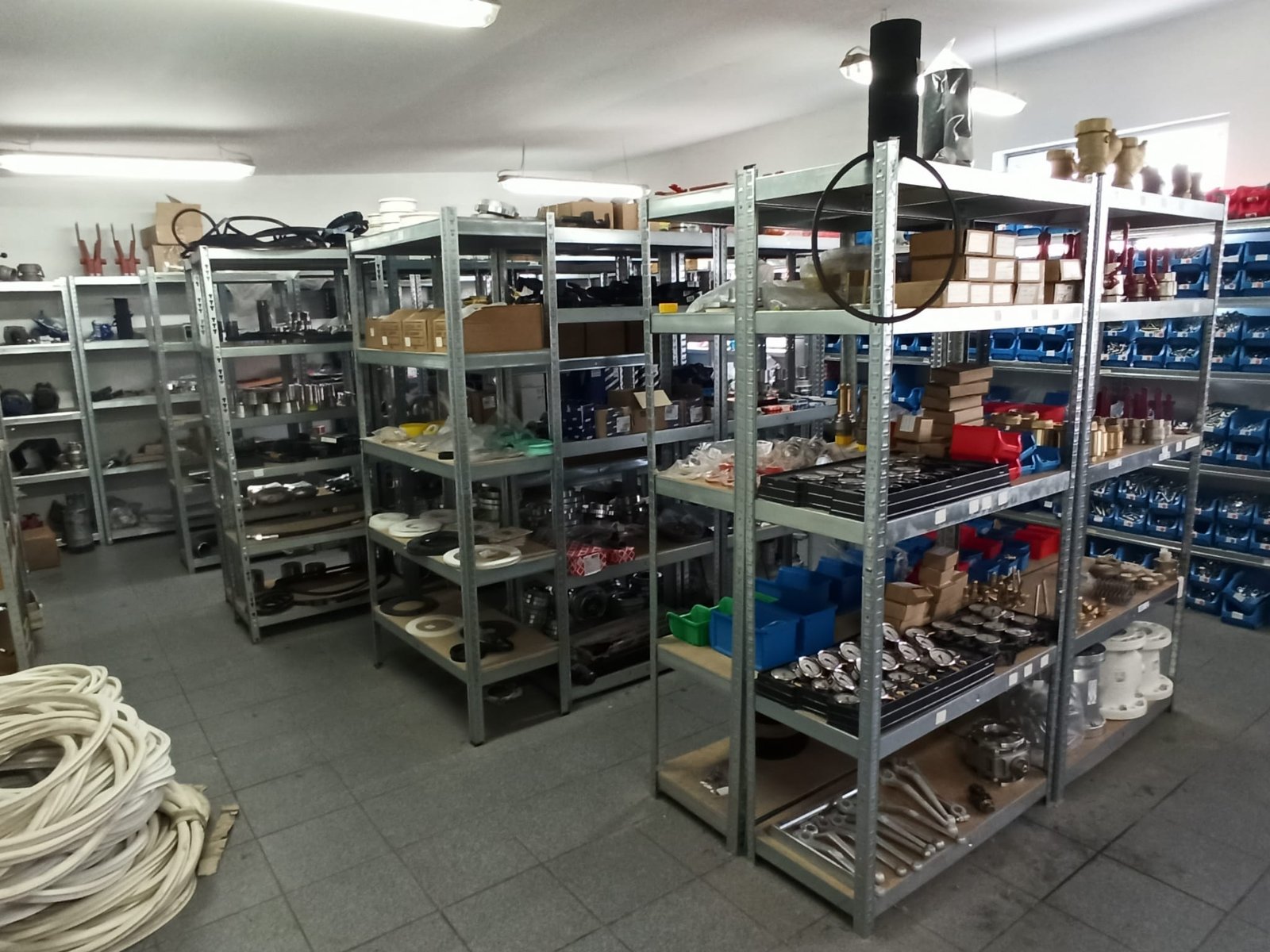
PHS Magnum stocks and supplies parts for Spitzer, Feldbinder, and other silo trailer makes: fast-moving items (seals, aeration pads, Storz couplings) are held in the Chorula warehouse; less common items are ordered from Germany. The site sits 4 km from the A4 motorway junction and 180 km from the German border — parts can be collected in person on a return trip, shipped to you, or fitted on-site in the workshop. The company operates under ISO 9001:2015, and for components subject to TDT inspection we advise which items require accompanying documentation.
Send a photo of the data plate and the worn part to biuro@magnumchorula.pl or call +48 602 716 551 — we will identify the correct part and confirm availability. Browse all categories with descriptions and wear symptoms: silo trailer spare parts . Parts for other trailer makes and types are covered in the network-wide specialist trailer spare parts catalogue .