In Brief
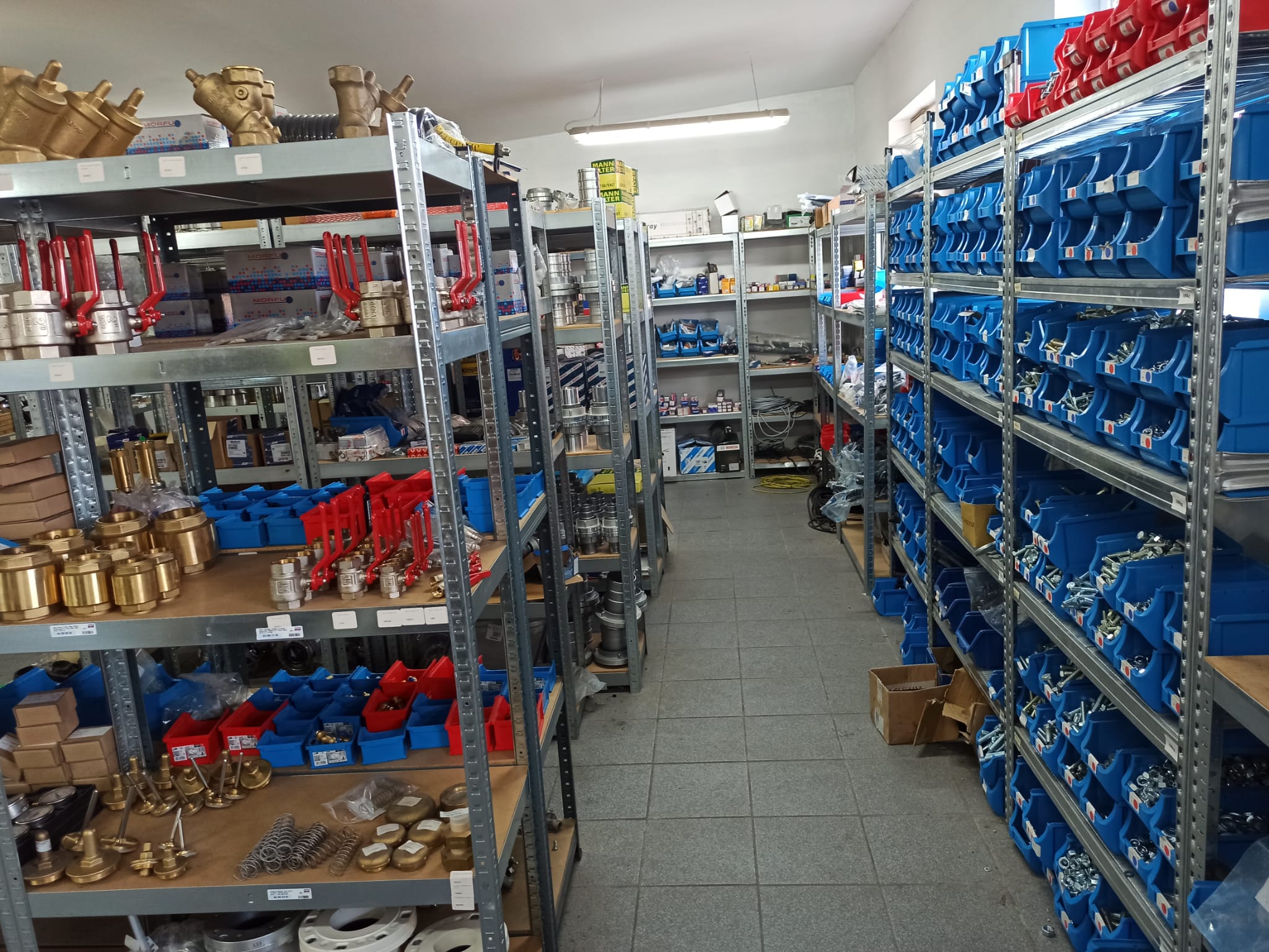
Spitzer cement tankers wear through aeration pads and bottom valve assemblies 2–3 times faster during bulk cement haulage than during plastic granulate transport — and the alkaline nature of cement corrodes the aluminium tank in ways that are invisible to the naked eye. PHS Magnum stocks parts at our Chorula depot: polyamide aeration pads, DN100–DN150 slide valves, EPDM manhole seals. Delivery to Poland, Germany, and the Czech Republic, or on-site fitting.
Tel: +48 602 716 551 · biuro@magnumchorula.pl
Cement and Spitzer Aluminium — Why It’s a Demanding Combination
Spitzer SF and SK series silo trailers feature tanks manufactured from EN AW-5083 aluminium alloy. It is an excellent material: lightweight, resistant to atmospheric corrosion, and suitable for most bulk materials. Its one weakness is alkalis.
Portland cement in contact with moisture creates an environment with a pH of 12–13. Aluminium is stable in the pH 4–9 range. Above pH 11, the passive Al₂O₃ layer dissolves faster than it can regenerate. The effect is gradual but irreversible: pitting corrosion inside the tank at flanges and fittings, and galvanic attack wherever aluminium contacts galvanised steel or brass.
This is not theory — it is what we see in our service facility from Spitzer silo trailers with five to eight years of cement haulage behind them.
Practical implication: Spitzer trailers used for cement require shorter service intervals than those used for granulate, and a different choice of seal materials. Applying the same schedule as “for PP” is a mistake that carries a cost.
Spitzer Cement Tanker Parts — Components and Service Life
Aeration Pads (Polyamide — Mandatory)
A larger Spitzer silo trailer carries 10–14 aeration pads on the floor of the cylindrical tank. These are the critical components of the discharge system.
| Parameter | PP/PE Granulate | Portland Cement |
|---|---|---|
| Pad material | Polyester | Polyamide |
| Service life | 3–6 years | 1–2 years |
| Discharge cycles | ~1,500–3,000 | ~300–600 |
| Primary failure mode | Material ageing | Pore cementation + alkaline degradation |
Why polyamide and not polyester: polyamide offers substantially better resistance to alkaline environments (pH > 11). Polyester pads degrade within a single cement season — the pores enlarge, cement dust enters the air lines, and discharge efficiency drops.
Number of pads by capacity:
- Smaller tanks (~34 m³): 8–10 pads
- Medium tanks (~45–55 m³): 10–12 pads
- Larger tanks (~60–66 m³): 12–14 pads
In stock: polyamide aeration pads for Spitzer silo trailers in standard sizes. Full set replacement time: 4–6 working hours in our workshop.
Discharge Slide Valves DN100–DN150
The discharge valve (butterfly or ball type) is the component most commonly seized by cement residue. Dry cement setting between the plug and seat after a period of inactivity is a classic failure mode, particularly with fluctuating temperatures — cement hardens in the presence of moisture and warmth.
Typical problems:
- DN125 valve will not open (seized by cement binder)
- Valve does not seal fully — air leaks during pressure testing
- Galvanic corrosion at Camlock fitting (aluminium tank body + brass fitting)
Available sizes: DN80, DN100, DN125, DN150
Seal materials: EPDM (standard for cement duty), PTFE (where cement is blended with chemical admixtures)
Manhole Seals — Hard EPDM
Spitzer top manholes: round D500 or oval 600×450 mm.
For cement duty: EPDM Shore A hardness 50–60 (firmer than the standard 40 Shore A). Harder rubber degrades more slowly in alkaline conditions and maintains its seal under repeated manhole clamping.
Replacement indicators: cement dust ingress at the manhole during loading, hissing air escape, or a manhole that fails to seal despite tightening.
Replacement interval for cement duty: every 12–18 months (versus 3–5 years for granulate).
Safety (Pressure Relief) Valves
Spitzer silo trailers operate at a discharge pressure of approximately 2 bar. The safety valve is particularly susceptible to cementation — fine cement particles block the seat.
Set pressures: typically 2.0–2.2 bar
Mandatory recertification: every 5 years, or whenever malfunction is suspected
In stock: 2.0 and 2.2 bar valves
Camlock Fittings and Discharge Hoses
Camlock fittings (3"–4"): after cement transport, inspect aluminium fittings regularly for galvanic corrosion. Replacing aluminium fittings with aluminium equivalents eliminates galvanic coupling. Avoid brass Camlocks on aluminium tanks.
Discharge hose (DN100, 6–9 m length): polyurethane or rubber with internal reinforcement. Service life is shorter in cement duty due to internal abrasion from the aggressive load.
Replacement Schedule — Spitzer Cement Tankers
| Component | Interval for Cement Duty |
|---|---|
| Aeration pads (polyamide) | Every 12–24 months, or when discharge times increase |
| EPDM manhole seals | Every 12–18 months |
| Discharge slide valve inspection | Every 6 months (after each season) |
| Safety valves | Recertification every 5 years; inspection annually |
| Camlock fittings | Corrosion check every season; replace at first sign of pitting |
| Discharge hose | Every 2–3 years (shortened by abrasive cement) |
Order Parts or Book Fitting
Provide the trailer model (SF or SK series, e.g. SF 2755 / SK 2760 CAL), year of manufacture, and VIN — we will select the correct sizes.
Phone: +48 602 716 551 (Mon–Fri 06:00–20:00, Sat 07:00–15:00)
Email: biuro@magnumchorula.pl
Courier delivery throughout Poland, Germany, and the Czech Republic — or fitting at the PHS Magnum service facility in Chorula (4 km from the A4 Gogolin junction, 180 km from the German border).
Related: OEM Spare Parts · Spitzer Trailer Service · TDT Inspections and Certification · Aeration Pad Guide · Common Spitzer Faults