In Brief
Spitzer silo trailer pneumatic system — compressed air from the tractor PTO compressor or on-board unit flows through a pre-filter, master isolating valve (DN100/125), distribution manifold, chamber isolating valves, and into the aeration pads on the chamber floor. Working pressure: around 2 bar. Five most common faults: leaking high-pressure hose, seized isolating valve, failed hatch EPDM seal, blocked air filter, worn-out aeration pads. Service interval: every 50,000 km or 12 months. PHS Magnum services Spitzer pneumatics for both the SF (non-tipping) and SK (tipping) series.
How the Pneumatic System Works
Understanding the Spitzer pneumatic circuit is the foundation for effective fault diagnosis. Unlike a tipper or curtainsider, a silo trailer is effectively a mobile pressure vessel — every component in the circuit matters for both discharge efficiency and safety.
Airflow Diagram
Tractor PTO / on-board compressor
            ↓
Pre-filter (oil separator / coalescing filter)
            ↓
Master isolating valve (DN100 or DN125)
            ↓
Distribution manifold
            ↓
Chamber isolating valves (one per chamber)
            ↓
Aeration pads (chamber floor)
            ↓
Bulk material — fluidised
            ↓
Bottom outlet valve → discharge line → destination silo
The pressure gauge monitors manifold pressure. The safety relief valve (MOP — Maximum Operating Pressure) protects the vessel from over-pressurisation. The MOP is set to the trailer’s documented working pressure, typically around 2 bar.
5 Common Pneumatic Faults on Spitzer Trailers
Fault 1: Leaking High-Pressure Hose
Symptoms: Audible hissing during operation. System fails to hold working pressure. Extended discharge time. Pressure drops steadily even with compressor running.
Causes:
- Mechanical abrasion — hose rubbing against chassis, exhaust components or support brackets
- Rubber ageing — cracks forming at crimped end fittings after 5–8 years
- End fitting corrosion from road salt, particularly at the ferrule/hose interface
- Improper hose routing — minimum bend radius exceeded, kink forming
Diagnosis: Visual inspection of full hose routing. Apply soapy water at fittings and along hose body under working pressure.
Repair: Replace with an approved hose (rated to minimum 2× MOP burst pressure). Generic hydraulic shop hoses may not meet the temperature and chemical resistance requirements of bulk material service. Stainless steel fittings recommended in salt-exposure zones.
Roadside repair? Yes — if you carry a replacement hose and crimping fittings, or a compression-type temporary coupling. A hose clamp repair is not acceptable at pressures above 0.5 bar. Temporary repair: get to a workshop the same day.
Fault 2: Seized or Leaking Isolating Valve
Symptoms: Unable to isolate air supply to a specific chamber. Chamber fails to discharge despite open valve. Air leaking past valve stem (felt by hand, confirmed with soapy water).
Causes:
- Accumulation of cargo dust in the valve seat (particularly with fine powders — flour, soda ash, fly ash)
- Stem corrosion due to deferred maintenance
- Damaged EPDM stem seal — compressed to a flat disc after years of use
- Physical seat distortion from an impact (kerb strike, coupling collision)
Valve types on Spitzer trailers: Butterfly (wafer-type) valves DN100 and DN125 are standard on the distribution manifold. Ball valves appear on low-pressure branch lines.
Diagnosis: Check whether the valve stem rotates freely by hand. A stuck stem indicates seizure or corrosion. A stem that turns but allows through-leakage indicates a seat or seal fault.
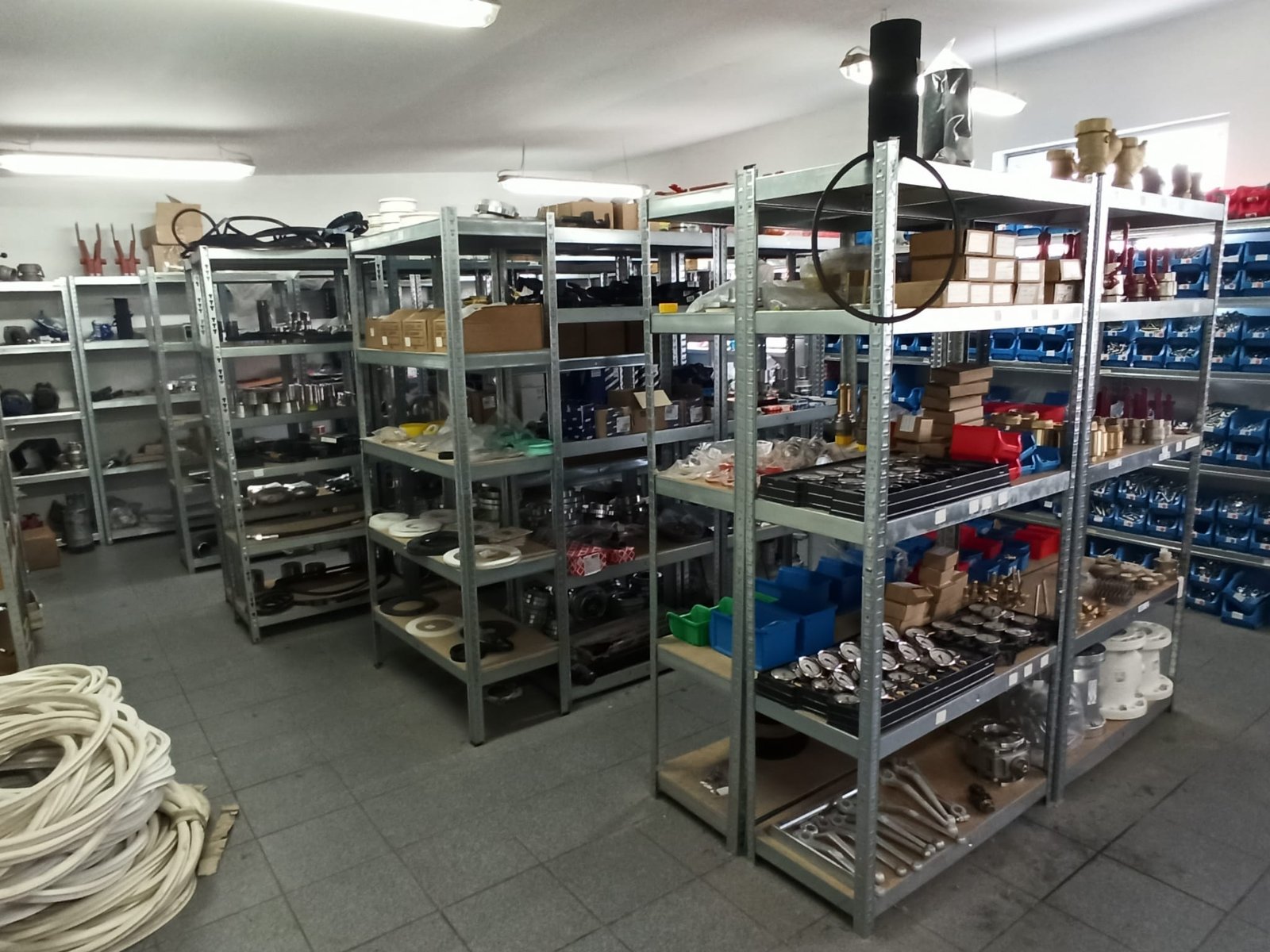
Repair: Disassemble and clean the seat. Replace stem seals (most common repair). Full valve replacement if seat distortion is confirmed. Parts available from PHS Magnum — see spare parts .
Roadside repair? Penetrating oil and compressed air may free a mildly seized stem. Stem seal replacement requires a workshop.
Fault 3: Failed Hatch EPDM Seal
Symptoms: System fails to build above 0.3–0.5 bar despite a serviceable compressor. Audible hissing at the hatch. Cargo may be contaminated by moisture ingress when static.
Causes:
- Rubber hardening and cracking from UV exposure and thermal cycling (outdoor storage)
- Mechanical damage during loading — heavy material or equipment striking the hatch area
- Dirt or cargo residue trapped between the seal and seat
- Worn hatch locking mechanism — insufficient clamp force on the seal
Diagnosis: Apply soapy foam around the full circumference of the hatch seal under working pressure. Bubbles confirm leak location. Visually inspect the seal: a serviceable EPDM seal should be flexible, uniform in cross-section, and free of cracks or flat-spots exceeding 30% compression.
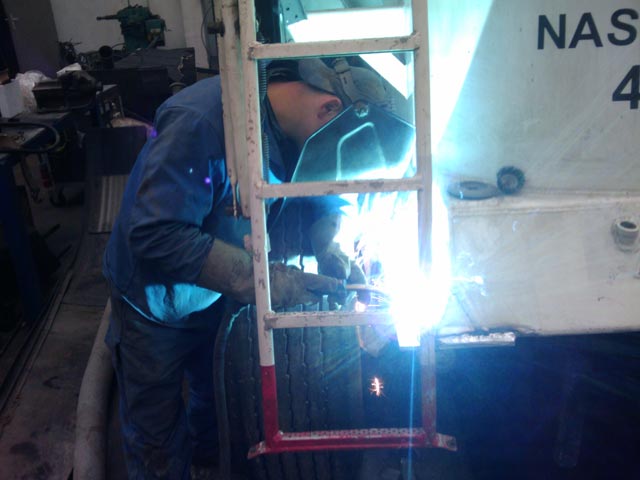
Repair: Replace the EPDM seal with the correct profile for the specific Spitzer model — hatch cross-section profiles vary by series and model. Where the seal seat (the steel groove) is corroded or deformed, mechanical repair (grinding, welding) or hatch cover replacement is required.
Roadside repair? High-temperature silicone applied as a temporary measure allows continued operation at pressures below 0.5 bar only. For full working pressure: workshop repair required.
Fault 4: Blocked Air Filter
Symptoms: Compressor works under increased load (audible straining). Pressure builds slowly. Compressor may overheat. In units with a sight glass on the filter housing: visible contamination of the filter element.
Causes:
- Service interval exceeded — most common cause
- Operating with particularly dusty cargoes (fly ash, flour, talc) without shortened maintenance intervals
- Water or oil drawn in from the tractor PTO circuit (inadequate separation at tractor)
Diagnosis: Pressure differential measurement across the filter (manometers before and after the filter housing). A differential exceeding 0.2 bar at rated flow indicates a blocked element. At minimum: visual inspection of the filter element at every service.
Repair: Replace the filter element. If oil contamination is present: check the oil separator and PTO circuit filtration on the tractor. Running an oil-contaminated filter will destroy aeration pads within months.
Roadside repair? Yes — element swap takes 15–30 minutes and requires no special tools. Carry at least one spare element.
Fault 5: Worn-Out Aeration Pads
Symptoms: Incomplete discharge — material remains on chamber floor after discharge cycle (5–20% of capacity). Pressure builds without effective discharge. Cargo dust or powder found in the air circuit (pad passing material back into the system).
Causes:
- Natural end-of-life (service life 1–6 years depending on cargo and pad material)
- Mechanical damage during loading
- Chemical attack — wrong pad material selected for the cargo (e.g. polyester pads with alkaline materials)
- Moisture and biological degradation of textile pad
Diagnosis: Access via the top hatch with a torch — inspect each pad visually. Low-pressure test (0.1 bar): air should permeate evenly across the entire pad surface, not concentrate in holes or edges.
Repair: Aeration pad replacement — full service at PHS Magnum. Pad set for a standard ~55 m³ silo trailer: 6–8 hours labour. More detail: Spitzer aeration pads guide .
Roadside repair? No. Requires tank emptying, cleaning, pad removal and refitting with correct torque on retaining frames. Workshop only.
Preventive Maintenance Schedule
Every 50,000 km or 12 months
- Replace air filter element (pre-filter / oil separator)
- Inspect and lubricate isolating valves (use temperature-resistant, water-repellent grease)
- Full visual inspection of all hoses — cracks, abrasion, bulging at fittings
- Inspect hatch seals — squeeze test, visual inspection for cracks and flat-spots
- System leak test at working pressure: hold 3 minutes with compressor isolated, pressure drop < 0.1 bar acceptable
- Visual inspection of aeration pads through top hatch
Every 100,000 km or 24 months
- Proactive hose replacement — even without visible damage (rubber fatigue)
- Safety relief valve function test (MOP opening pressure verification)
- Pressure gauge calibration check or replacement
- Detailed aeration pad inspection — specialist assessment
Every 5 years
- Mandatory TDT (Polish Transport Technical Supervision) pressure vessel inspection under Polish/EU law
- Safety relief valve replacement
- Comprehensive inspection of all pressure-retaining components
More on TDT inspections: Spitzer silo trailer TDT inspection .
Roadside vs Workshop: Quick Reference
| Situation | Roadside Fix? | Notes |
|---|---|---|
| Leaking hose (small) | Yes — carry spare hose | Temporary only, get to workshop same day |
| Seized valve — mild | Yes — penetrating oil | If no improvement: workshop |
| Blocked filter element | Yes — 15 min swap | Keep spare element in tool box |
| Failed hatch seal | Limited | Below 0.5 bar only, temporary silicone |
| Worn aeration pads | No | Workshop + empty tank required |
| MOP relief valve fault | No — safety critical | Do not operate; call workshop immediately |
| Broken pressure gauge | Yes — replace gauge | Do not operate without working gauge |
Spitzer Pneumatic System Service — PHS Magnum
PHS Magnum in Chorula, near Opole, Poland has been specialising in Spitzer silo trailer service for over 30 years. We diagnose, repair and maintain pneumatic systems for both Spitzer series — SF (non-tipping) and SK (tipping).
Workshop location: Chorula, 4 km from the A4 motorway (Gogolin junction), 180 km from the German border. Convenient for operators from Poland, Germany, Czech Republic and Slovakia.
Call for service or a repair estimate: +48 602 716 551
Related: Spitzer trailer service · Silo trailer spare parts · TDT inspections · Aeration pads guide