In Brief
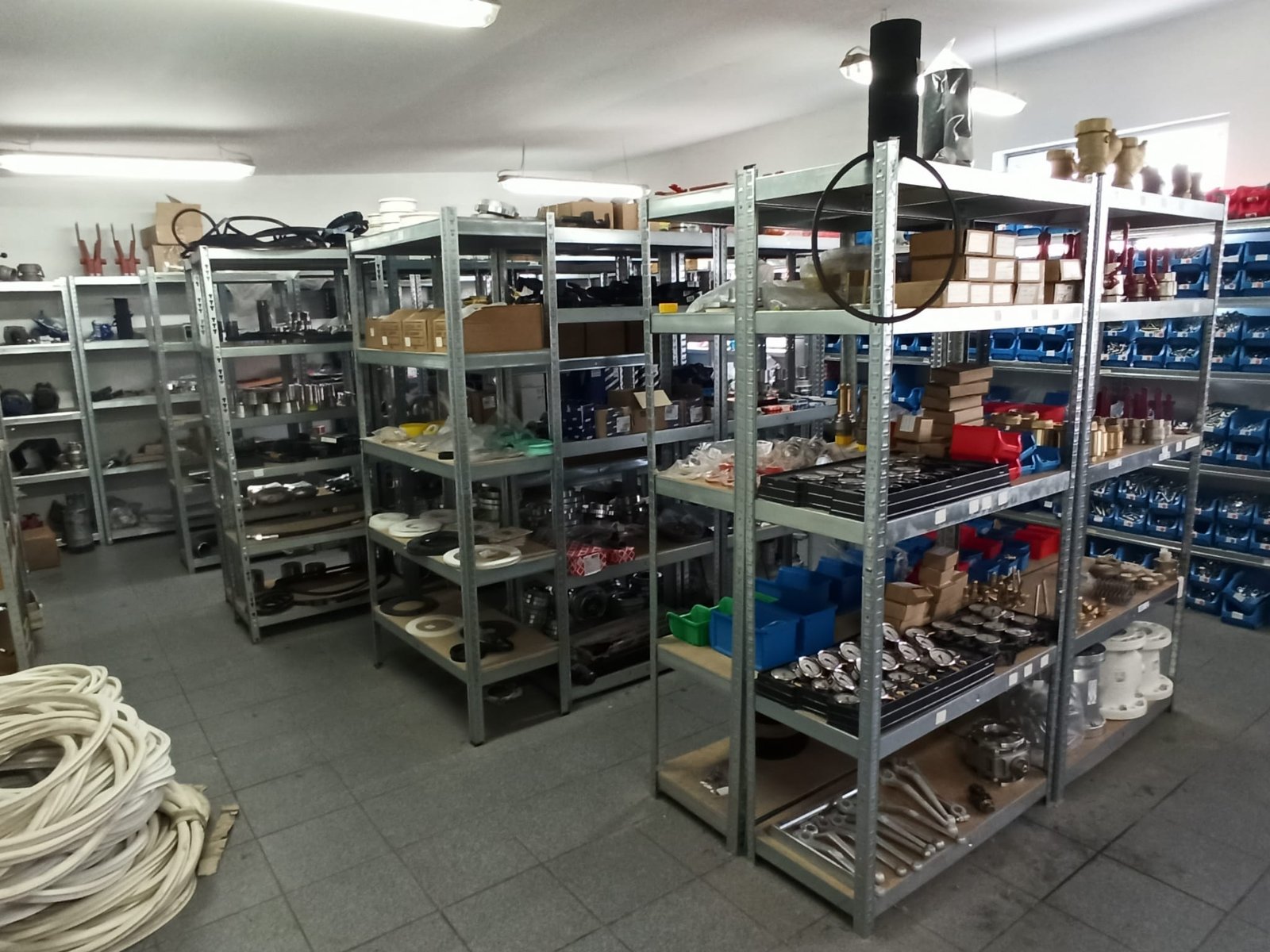
Spitzer silo trailer spare parts — the 10 parts that cover 80% of all workshop interventions: aeration pads (model and compartment-specific), EPDM hatch seals, DN100/DN125 butterfly valves, high-pressure hoses (50 bar rated), discharge gate valves, air filter elements, flange gaskets DN100–DN200, MOP safety relief valves, Camlock quick couplings, and stainless hatch bolts. Always order with series, model, year and serial number. PHS Magnum in Chorula ships to Poland, Germany, Czech Republic and Slovakia — standard parts available same week.
The Business Case for a Spare Parts Buffer
A silo trailer sitting idle costs money — not just in repair bills, but in lost freight capacity. Every day a truck-and-trailer combination is out of service means a full day of lost revenue (depending on route, cargo and contract terms), plus driver waiting time.
Yet in practice, 80% of all Spitzer silo trailer repairs come down to the same 10–15 part types. Operators running a fleet of five or more Spitzer trailers who maintain a modest stock of these parts in their workshop or yard reduce their downtime per standard repair from 3–5 days (waiting for delivery) to a few hours.
This guide lists those parts — with practical notes on why each one matters and what to specify when ordering.
Top 10 Spare Parts for Spitzer Silo Trailers
1. Aeration Pads (compartment-specific)
Why it tops the list: Aeration pads are the primary discharge element on pneumatic, gravity-aerated SF-series trailers. Without serviceable pads, the trailer cannot complete a discharge cycle. Service life varies from 12 months (abrasive cargoes) to 6 years (clean granules). When a pad fails mid-contract, the trailer is effectively out of service.
What to order:
- Specify series and model designation (SF or SK), year and serial number — pad dimensions vary by compartment position (front, middle, rear) and model year
- Material: PES (plastic granules, flour, starch), PA (fly ash, talc, ground minerals), Silicone FG (food contact cargoes), PTFE (aggressive chemicals)
- Include retaining frame hardware (clamping strips, bolts)
Minimum buffer for a fleet: One complete pad set per model variant per 5 trailers.
More detail: Spitzer aeration pads guide
2. EPDM Hatch Seals
Why it matters: The hatch seal is the only barrier between the pressurised tank interior and the atmosphere. EPDM rubber hardens and cracks with UV exposure and thermal cycling — faster than the steel tank. A failed hatch seal prevents working pressure from building, effectively grounding the trailer.
What to order:
- Flat EPDM gasket for round hatches (DN400–DN500 — confirm model)
- Profiled EPDM seal for oval hatches (confirm model)
- ND50/ND60 seals for inspection hatches
Signs a seal needs replacing: Rubber compressed flat (< 30% original thickness); surface cracking visible to the naked eye; trailer cannot hold working pressure despite all other components being serviceable.
3. Butterfly Valves DN100 and DN125
Why it matters: Butterfly (wafer) valves in the distribution manifold control air supply to individual chambers. Stem corrosion and seat wear are the leading failure modes after 5–8 years in service. A seized valve can prevent discharge from a specific chamber; a passing valve wastes compressor capacity.
What to order:
- Butterfly valve DN100 (smaller-volume trailers)
- Butterfly valve DN125 (larger-volume trailers)
- Valve repair kits (stem seals, bushings) as a cost-effective alternative where the body is undamaged
Note: Valves must be rated to at least 1.5× MOP of the trailer’s pressure system.
4. High-Pressure Hoses
Why it matters: Hoses connecting the manifold to the bottom valves and discharge line operate in a demanding environment — vibration, heat from the exhaust area, road salt, and repeated pressurisation cycles. Typical service life: 3–5 years.
What to order:
- Rubber-braided hose DN50–DN80, test pressure minimum 50 bar (lengths 0.5–2.0 m)
- Flexible hose DN100–DN125 with DIN flanged ends
- Stainless steel hose clamps and ferrules
Buffer: 2–3 sections of DN50 and DN80 hose per workshop. These are the most frequently damaged by chassis abrasion.
5. Discharge Gate Valves
Why it matters: The discharge gate (bottom outlet valve) opens the path between the tank compartment and the conveying line. After 200–300 operating cycles per year, stem seizure, seat corrosion and seal wear are predictable failure modes.
What to order:
- Complete gate valve assembly for the specific model and compartment position (front, middle, rear — not interchangeable)
- Gate valve repair kit: seals, sliding rings, actuator hardware
- Control linkages and Bowden cables (mechanical actuation models)
Tip: When ordering, specify whether the valve has lever, pneumatic or remote actuation — the replacement differs accordingly.
6. Air Filter Elements
Why it matters: A blocked filter reduces airflow, overloads the compressor and accelerates wear. A contaminated filter (oil ingress) will destroy aeration pads within months. Filter elements are cheap insurance against expensive compressor and pad failures.
What to order:
- Pre-filter / oil separator element at the PTO compressor (size depends on compressor make)
- Oil-water separator element (on-board compressor units)
- Fine filter cartridge for the tank air circuit (if fitted)
Interval: Every 50,000 km or 12 months. For trailers running dusty cargoes (fly ash, flour): shorten to every 30,000 km.
7. Flange Gaskets DN100–DN200 (EPDM)
Why it matters: Every flanged connection — discharge manifold, conveying line, valves — requires a gasket. Every time a connection is broken for maintenance or repair, the gasket must be replaced. Reusing a compressed gasket is poor practice; the cost of a gasket is trivial compared to the cost of a repeat leak.
What to order:
- Flat EPDM gasket DN100 PN16
- Flat EPDM gasket DN125 PN16
- Flat EPDM gasket DN150 PN16
- Flat EPDM gasket DN200 (tank flange connection — required at TDT inspection)
Buffer: 5 pieces of each size. Low cost, high availability value.
8. MOP Safety Relief Valves
Why it matters: The safety relief valve (MOP valve) is the last line of defence against over-pressurisation of the tank. After activation, the valve must be replaced or recertified — it cannot be re-used. Carrying a spare avoids a site delay when a valve activates during a discharge.
What to order:
- MOP valve set to the trailer’s documented working pressure (typically around 2 bar)
- Check certification date — MOP valves have a statutory validity period
Note: MOP valve replacement must be documented in the trailer’s pressure vessel records (TDT file — Polish Transport Technical Supervision).
9. Camlock Quick Couplings (DN50, DN80)
Why it matters: Camlock couplings connect the trailer’s discharge line to the delivery point silo inlet. They are handled at every discharge — typically 1–3 times per day. EPDM sealing inserts wear out within 12–18 months of intensive use.
What to order:
- Camlock type C (plug with arms) DN50 and DN80 (aluminium or stainless steel)
- Camlock type E (dust cap) for travel protection
- EPDM sealing inserts for Camlock bodies — inexpensive, fast to replace
Note: Aluminium Camlock couplings are not suitable for alkaline cargoes (soda ash, lime). Use stainless steel for these applications.
10. Stainless Steel Hatch Bolts (M10/M12)
Why it matters: Hatch cover fasteners in A2-70 or A4-80 stainless steel corrode slowly — but faster when exposed to aggressive cargoes (soda, road salts). Seized hatch bolts at a TDT inspection delay the certification process. Replacing them proactively at service intervals is straightforward and inexpensive.
What to order:
- M10×30 A2-70 stainless (round hatch DN400–DN500) — pack of 20
- M12×35 A2-70 stainless (larger hatches) — pack of 20
- Stainless spring washers and hex nuts, matching grade
How to Order from PHS Magnum: Step by Step
Required information for every order
To identify the correct part, always provide:
- Trailer series and model: SF (non-tipping) or SK (tipping), with the full model designation from the data plate
- Year of manufacture (data plate or registration document)
- Serial number — critical: Spitzer changed component specifications across production runs. The serial number pins the exact specification.
- Part name or catalogue number — if known. If not, describe the fault and we will identify the correct part.
- Quantity required
Where to find the serial number
The Spitzer data plate is located on the left side of the tank, near the front support leg or on the main frame rail. It carries the series and model designation (e.g. SF or SK) together with the serial number.
Delivery times from Chorula
| Part type | Poland | Germany / CZ / SK |
|---|---|---|
| Standard (pads, seals, hoses) | 1–3 business days | 2–4 business days |
| Valves DN100/DN125 | 2–4 business days | 3–5 business days |
| Discharge gate valves | 3–7 business days | 5–8 business days |
| Non-standard / special order | 7–14 business days | 10–16 business days |
For urgent requirements: call first. We can arrange same-day or next-day courier shipping when the part is in stock.
The Economics of a Spare Parts Buffer
Running a fleet of silo trailers without a parts buffer means every standard fault turns into a multi-day delay:
- Trailer off-road for 1 day waiting for a DN80 hose: a full day of lost revenue
- Cost of a DN80 hose from buffer stock: a small fraction of one day’s downtime
- Net saving on one incident: nearly the entire cost of the standstill
For a fleet of 10 trailers with two such incidents per year, a buffer of the 10 parts listed here typically pays for itself in under two years — often within the first season. Ask for a stocking quote: +48 602 716 551.
The less visible benefit: driver satisfaction, customer relationship stability, and predictable fleet availability for dispatch planning.
Order Spitzer Spare Parts – PHS Magnum Chorula
PHS Magnum supplies Spitzer silo trailer spare parts to fleets and workshops in Poland, Germany, Czech Republic and Slovakia. Our warehouse in Chorula, near Opole, holds standard parts for same-week dispatch. We ship EU-wide via DHL and DPD.
Call: +48 602 716 551
Email: biuro@magnumchorula.pl
Location: Chorula, 4 km from the A4 motorway, 180 km from the German border
Related: Silo trailer spare parts · Spitzer trailer service · Aeration pads guide · Pneumatic system faults